
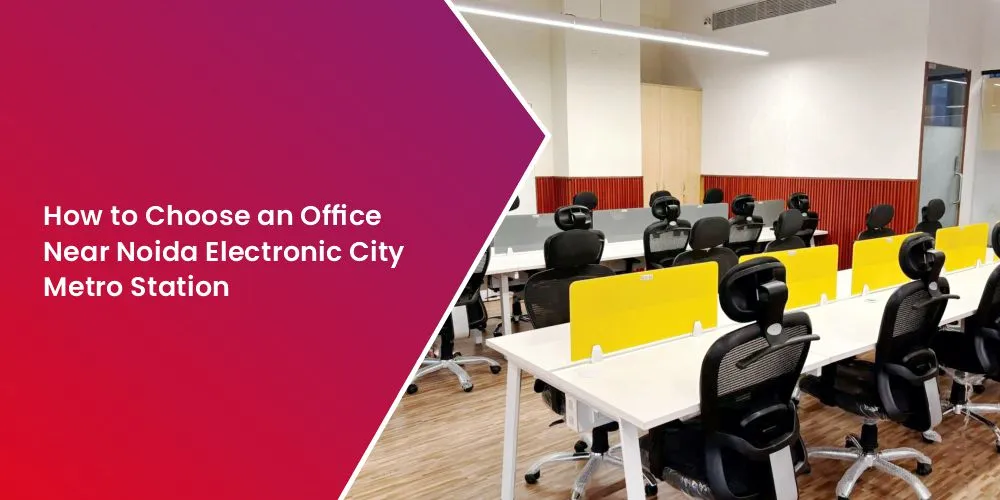
Choosing an office near Noida Electronic City Metro Station can make daily commuting easier for employees, improve accessibility for clients, and help businesses stay connected to key commercial areas. With metro connectivity, nearby residential neighbourhoods, and access to essential business facilities, this location can be a practical choice for startups, growing teams, and established companies. However, finding the right office involves more than just selecting a convenient location.
Before making a decision, consider factors such as rental costs, office size, connectivity, parking availability, nearby amenities, and the flexibility to accommodate future growth. Choosing the right office near Noida Electronic City Metro Station means finding a workspace that fits your budget, supports your team’s daily needs, and offers room for your business to grow.
Why Noida Electronic City Metro Station Is a Smart Location Anchor
Noida Electronic City is a well-known station on the Blue Line, and the surrounding Sector 62 area has grown into a major commercial cluster. For businesses, the location offers several advantages.
Easier hiring. Metro access widens your talent pool. Candidates from across Noida, Delhi, Ghaziabad, and the wider NCR can reach you without depending on a car. This is especially valuable for freshers, junior hires, and teams who prefer predictable commutes.
Reliable daily commuting. Metro travel is less affected by traffic jams, weather, and parking problems. For employees, this means fewer late arrivals and less fatigue.
Better client access. Clients and partners visiting from Delhi or other parts of NCR can reach you easily, which matters for sales meetings, interviews, and onboarding sessions.
A ready business ecosystem. The area around Sector 62 includes IT parks, restaurants, banks, hotels, and shopping, which makes daily operations simpler and networking easier.
All of this is a strong starting point. The next step is working out which offices actually deliver on it.
Step 1: Define What “Near” Really Means for Your Team
“Near the metro” can mean very different things:
• At the gate or inside the same complex: a short walk, often under five minutes
• A short walk: around 5 to 10 minutes
• Requires an e-rickshaw or auto: workable, but adds cost, waiting time, and weather exposure
• Close on the map but hard to reach: the distance looks small, but the route involves heavy traffic, crossings, or no safe walking path
Visit the route yourself at the times your team will travel, such as 9 am and 6 pm. Walk it, and look at pavement quality, lighting, road crossings, and how it feels after dark or in rain. If some of your team works late or in shifts, check the evening and night experience as well.
An office that is truly steps from the station will feel different from one that is “near” on paper.
Step 2: Decide Which Type of Workspace Fits Your Business
Before comparing buildings, decide what kind of space you actually need. Near the Electronic City Metro, you will generally find these options:
Traditional leased office
You rent a floor or unit directly from a landlord, handle interiors, furniture, internet, power, and maintenance, and typically sign a multi-year lease with a security deposit. This suits larger, stable teams that want full control.
Managed office
A provider builds, furnishes, and maintains a private space for you, so you get a customised office without managing the fit-out or facilities. This works well for growing teams that want privacy and branding without construction headaches.
Coworking space
You rent desks or cabins in a shared, fully serviced environment. Internet, furniture, meeting rooms, and amenities are included, and plans are flexible. This suits startups, freelancers, SMEs, remote teams, and companies testing a new market.
Virtual or hybrid arrangements
Some teams keep a small base and use meeting rooms or hot desks when they need to meet in person. This suits distributed teams.
Matching the type of space to your stage of growth is the single biggest cost-saving decision you will make. If your headcount might change in the next six to twelve months, flexibility is worth more than a slightly lower rent per square foot.
Step 3: Calculate the Real Cost, Not Just the Rent
Headline rent rarely tells the full story. When comparing offices near the metro, add up everything:
| Cost item | Traditional lease | Coworking / managed |
| Monthly rent | Yes | Bundled into plan |
| Security deposit | Often several months | Usually lower |
| Interiors and furniture | Your cost | Included |
| Internet and IT setup | Your cost | Included |
| Electricity and power backup | Often extra | Often included or simplified |
| Maintenance and housekeeping | Your cost | Included |
| Security and access control | Your cost | Included |
| Tea, coffee, pantry | Your cost | Often included |
| Meeting rooms | Not available, or your own | Available on demand |
| Admin time spent managing it all | Significant | Minimal |
For many small and mid-sized teams, an all-inclusive plan turns out cheaper than a traditional lease once these hidden costs are counted. For reference, coworking at BCogent in Sector 62 starts from ₹4,999 per seat per month, with infrastructure and essential amenities already in place.
Also consider speed. A ready-to-use space lets your team start working immediately, while a traditional office can take weeks or months to set up before anyone sits down.
Step 4: Inspect the Building and Surroundings
Once your shortlist is ready, look beyond the office itself.
Building quality. Look for a well-maintained A-grade building with reliable lifts, clean common areas, and professional reception. First impressions matter when clients and candidates visit.
Power backup. Frequent outages will hurt productivity. Confirm that backup covers the whole workspace, including lighting, air conditioning, and internet equipment.
Internet reliability. Ask about bandwidth, redundancy, and what happens if one connection fails. For teams doing video calls, cloud work, or development, this is non-negotiable.
Parking. Even if most people take the metro, some staff and visitors will drive. Check for secured parking, how many slots are available, and whether visitor parking exists.
Safety and security. Look for CCTV, controlled entry, and staff presence, especially if your team works late.
Food and daily convenience. Cafes and eateries inside or near the complex make daily life easier. The BCogent building, for example, has food outlets such as Bikanervala and Black Coffee Cafe inside the IT park.
Nearby landmarks and services. Good access to banks, hospitals, malls, and hotels is useful for staff and visiting clients. In Sector 62, nearby landmarks include Logix Cyber Park, Stellar IT Park, Shopprix Mall, DLF Mall of India, and Fortis Hospital.
Step 5: Check Flexibility and Contract Terms
Business plans change. The office you choose should be able to change with them.
Ask every provider:
• What is the minimum commitment? Compare lock-in periods and notice terms.
• Can I add or reduce seats? This matters if you are hiring or restructuring.
• Can I upgrade from desks to a cabin? A clear growth path saves you from moving again.
• What is included in the price? Clarify meeting room hours, printing, parking, and storage.
• Are there hidden charges? Ask about maintenance fees, power charges, and exit costs.
• What is the access policy? If you need 24/7 or weekend access, confirm it is included.
If your team might grow quickly, read our guide on planning office capacity when your team is growing faster than expected to build flexibility into your decision from the start.
Step 6: Evaluate Meeting Rooms and Collaboration Space
Many teams underestimate how much they rely on meeting space. Even a small team needs rooms for:
• Client meetings and presentations
• Candidate interviews
• Team stand-ups and planning sessions
• Training and workshops
• Confidential calls
Check how many meeting rooms are available, whether you can book them easily, how they are priced, and whether they have the equipment you need (display, conferencing, whiteboard). Phone booths and quiet zones are also valuable for focused work and calls.
If a building has no meeting rooms, you may end up taking important clients to a cafe, which rarely creates the right impression.
Step 7: Think About Hiring, Retention, and Culture
An office is also a recruiting tool. When choosing near the metro, think about how the space will feel to people walking in for the first time.
• Does it look professional and welcoming?
• Is there natural light, comfortable seating, and decent common areas?
• Does it offer a place to take breaks, have tea or coffee, and talk informally?
• Will people feel safe and comfortable working there at any hour?
A well-located, well-designed office can improve punctuality, morale, and retention. Employees often rate commute convenience among their top workplace priorities, so a metro-friendly location is a genuine benefit you can mention in job listings.
Step 8: Visit, Compare, and Ask for a Trial
Brochures and listings only tell you so much. Before committing:
1. Shortlist three to four options that meet your needs on location, budget, and type of space.
2. Visit each at the time your team would actually be there. Observe noise, crowding, and the atmosphere.
3. Test the commute from the metro station on foot.
4. Check the internet by running a speed test and a video call.
5. Meet the management team. Responsiveness before you sign is a good indicator of responsiveness after.
6. Ask about a trial or day pass. Many coworking spaces let you try before you commit.
7. Talk to current members if possible, and read reviews.
Common Mistakes to Avoid
• Choosing only by rent. The cheapest option often costs more once hidden charges, setup, and lost productivity are included.
• Ignoring the walk from the station. A poor last-mile route erodes the benefit of metro access.
• Overbuying space. Leasing for the team you hope to have, rather than the one you have, ties up cash.
• Underestimating growth. The opposite mistake forces an early, disruptive move.
• Skipping the meeting room check. You will notice the gap on the first day a client visits.
• Not testing the internet. Weak connectivity affects everyone, every day.
• Skipping the contract details. Lock-ins, notice periods, and exit terms matter as much as price.
Quick Checklist: Choosing an Office Near Noida Electronic City Metro
• Walking distance from the metro tested at peak hours
• Safe, well-lit route, including evenings
• Right type of space: lease, managed office, or coworking
• Total cost calculated, including hidden charges
• Reliable internet and power backup confirmed
• Secured parking for staff and visitors
• Meeting rooms and phone booths available
• Flexible terms, with the ability to scale up or down
• Safe, professional building with food options nearby
• Trial visit completed before signing
Why Teams Choose BCogent Coworking at iThum Tower, Sector 62
BCogent Coworking is located at iThum Tower in Sector 62, an A-grade IT park with Electronic City Metro Station at its main gate. That means your team can walk from the metro to the workspace without relying on rickshaws or long drives.
Members get a ready-to-use, professionally managed environment, including:
• Flexible workspace options: dedicated desks, private cabins, shared workspace, and managed office space
• Meeting rooms for client meetings, interviews, presentations, and training
• High-speed internet and ergonomic seating
• 24/7 access and security, with CCTV and on-site staff
• Secured parking and power backup
• Tea and coffee, plus cafes and food outlets inside the IT park
• Convenient surroundings, including business parks, malls, and healthcare facilities nearby
There is no fit-out to manage and no long setup. You can start with a few desks and scale to a larger cabin as your team grows.
Want to see it for yourself? Book a tour at BCogent or explore our plans.
Frequently Asked Questions (FAQs)
1. Why is Noida Electronic City Metro Station a good location for an office?
It offers easy access to the metro network, which widens your hiring pool and gives employees a predictable commute. The surrounding Sector 62 area also has IT parks, eateries, banks, and other services that make daily work convenient.
2. How close should my office be to the metro station?
For the best commuting benefit, aim for a short, safe walk of around 10 minutes or less. Always test the route yourself at peak hours and check lighting, road crossings, and weather exposure.
3. Is coworking better than a traditional lease near the metro?
It depends on your team. Coworking suits startups, SMEs, and growing or uncertain teams that want flexibility and low setup costs. A traditional lease may suit large, stable teams that need full control and are comfortable with long commitments.
4. How much does a coworking space near Noida Electronic City Metro cost?
Prices vary by space type, location, and amenities. At BCogent, coworking plans start from ₹4,999 per seat per month. Please check the pricing page or contact the team for current details on cabins and managed offices.
5. What amenities should I look for in an office near the metro?
Look for reliable high-speed internet, power backup, secured parking, meeting rooms, ergonomic seating, 24/7 security, and pantry facilities. Nearby food options, banks, and healthcare are also useful.
6. Can I get 24/7 access to the office?
Some workspaces offer round-the-clock access, which helps night-shift teams, global-client teams, and flexible workers. BCogent offers 24/7 access for members, with CCTV surveillance and on-site staff.
7. Can I try a coworking space before signing up?
Many coworking spaces offer a day pass or trial. BCogent offers a free day pass or discounted trial so you can experience the space first. Contact the team to confirm current availability.
8. What is the difference between a private cabin and a managed office?
A private cabin is an enclosed space within a coworking environment, with access to shared facilities. A managed office is a larger, customised private space that the provider builds and maintains for you. Cabins suit small teams, while managed offices suit bigger teams wanting more privacy and branding.
9. Does the office have meeting rooms for client visits?
BCogent has fully equipped meeting rooms that can be booked for client meetings, interviews, presentations, and training sessions. Members receive discounted rates, and non-members can book on an hourly basis.
10. Is Sector 62 a good area for startups and growing businesses?
Yes. Sector 62 has a strong business ecosystem with IT parks, corporate offices, restaurants, banks, and strong connectivity, which supports hiring, client access, and networking.
Final Thoughts
Choosing an office near Noida Electronic City Metro Station is about more than saving a few minutes on the commute. The right choice combines true walkable access, the right type of space for your stage, transparent costs, reliable infrastructure, and the flexibility to adapt as your business grows.
Start by defining what “near” means for your team, compare the full cost of each option, inspect the building and its surroundings, and always visit before you decide. If you want a workspace that is ready from day one, flexible as you scale, and steps from the metro, a professionally managed coworking space can be the simplest path.
Contact BCogent Coworking and book a tour at iThum Tower, Sector 62, Noida.